
Closing a Business in Poland: Liquidation, Sale or Transformation
Closing a Business in Poland: Liquidation, Sale, or Transformation
Closing a business in Poland does not always mean failure. It is often a strategic decision. Owners may change their business model, partners, or country of operation. Sometimes restructuring is simply necessary.
Polish law provides several legal ways to end or restructure a business. These include company liquidation, sale of shares or the entire business, and transformation into another legal form. Choosing the right option is crucial. It affects liability, taxation, and the protection of shareholders and management board members.

Closing a Business in Poland Through Liquidation of a spółka z o.o.
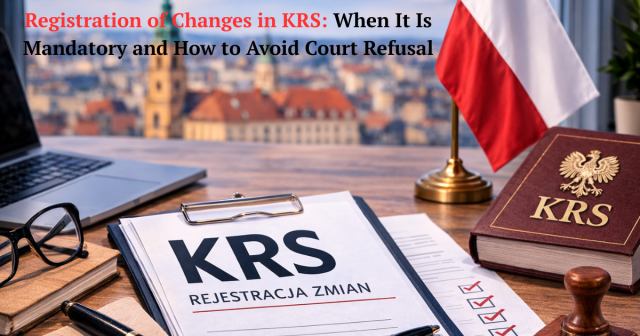
The most traditional method of closing a spółka z o.o. is liquidation. This is a formal legal procedure. It includes ending business activity, settling debts with creditors, fulfilling outstanding obligations, and removing the company from the National Court Register (KRS).
Liquidation begins with a shareholders’ resolution. A liquidator must be appointed. After liquidation is opened, the company cannot conduct new business activity. It may only complete existing matters.
The removal procedure is carried out through the Portal of Court Registers — prs.ms.gov.pl.
Liquidation requires publishing a notice to creditors. Statutory deadlines must also be observed. In practice, liquidation usually takes several months. Complex cases may last more than a year.
Sale of a Business as an Alternative to Liquidation
Another option is selling the business. This usually involves selling shares in a spółka z o.o. It allows owners to exit faster. There is no need to complete the full liquidation process.
The sale of shares must be notarized. A legal and financial review of the company is strongly recommended. Although this method is faster, it does not always eliminate all risks for former owners.
If the company was established through company registration in Poland, the exit structure should also be legally reviewed.
Company Transformation Instead of Closing a Business
A third option is transforming the company into another legal form. For example, a sole proprietorship (jednoosobowa działalność gospodarcza) may become a spółka z o.o., or vice versa.
Transformation preserves contracts and business history. At the same time, it changes the liability model and tax structure. The procedure is regulated by the Kodeks spółek handlowych. The official text is available at isap.sejm.gov.pl.
This procedure is legally complex. However, it ensures business continuity.
Suspension of Activity as a Temporary Solution
Polish law also allows temporary suspension of business activity. This solution is useful when operations are paused for a certain period.
For a sole proprietor (JDG), suspension is registered through CEIDG. For a spółka z o.o., suspension is possible only if the company has no employees.
If the company previously went through establishing a business in Poland, it is important to analyze tax and legal consequences before choosing a closure method.
Legal Conclusion
Closing a business in Poland may take the form of liquidation, sale, or transformation. Each option has different timelines and legal requirements.
Before making a decision, owners should review the company’s financial condition, obligations, and tax history. A properly selected mechanism minimizes risks and prevents unnecessary costs.






Leave a Reply