
PESEL NIP REGON in Poland — how foreigners can obtain them
How to obtain PESEL, NIP and REGON in Poland: a simple guide for foreigners
We explain in simple terms how to obtain PESEL, NIP and REGON in Poland. These identification numbers are essential for foreigners who plan to work, run a business or use public services in Poland.
In practice, confusion between PESEL, NIP and REGON is one of the most common reasons for delays in company registration, as well as problems with banks or tax authorities. Below, we explain everything clearly and step by step — the way lawyers do it.

PESEL NIP REGON in Poland: what they are and why they are needed
In the Polish administrative system, each of these numbers has a different purpose and cannot be replaced by another:
- PESEL — personal identification number
- NIP — tax identification number
- REGON — statistical number of a business entity
Understanding the differences between these numbers allows you to prepare documents correctly and avoid common mistakes at the start.
PESEL NIP REGON in Poland — how foreigners can obtain them
The procedure for obtaining each number depends on the foreigner’s status and the purpose of stay — employment, business activity or residence.
PESEL — personal identification number
PESEL (Universal Electronic System for Registration of the Population) is required, among others, for legal employment, opening a bank account, obtaining a Trusted Profile (Profil Zaufany) and accessing public services.
The application is submitted to the municipal office (urząd gminy or urząd miasta) at the place of residence. The PESEL number is issued free of charge, often on the same day.
NIP — tax identification number
NIP (Tax Identification Number) is used for tax settlements.
- for individuals without business activity, NIP is usually not required if they have PESEL
- for entrepreneurs and members of the management board of a sp. z o.o. without PESEL — it is mandatory
For a limited liability company (sp. z o.o.), the NIP number is assigned automatically during company registration in the S24 system.
NIP and REGON in Poland — tax and statistical numbers
REGON — statistical number of a company
REGON (National Business Registry) is used for statistical and registration purposes.
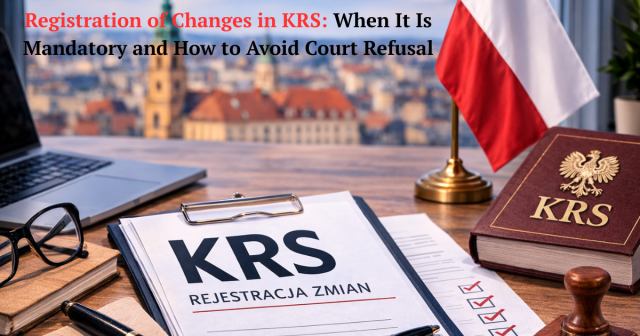
For a limited liability company, REGON is assigned automatically after entry into the National Court Register (KRS), without the need to submit a separate application.
Summary: PESEL, NIP and REGON in simple terms
- PESEL — personal identification number
- NIP — number used for tax purposes
- REGON — statistical business number
For foreigners in Poland, correct registration of PESEL, NIP and REGON is a basic requirement for legal work and doing business.
The lawyers at Hello Poland provide comprehensive support at every stage — from consultation to full registration and tax identification.
Official information on obtaining a PESEL number is available on the website gov.pl .
If you are planning to start a business, we recommend reading our guide on company registration in Poland.





Leave a Reply